June 11, 2026 ~ Venture Compassionate Ministries
What began as a practical challenge inside a busy food pantry soon became something much larger: a story of innovation, partnership, compassion, and shared purpose. At the Twelve Loaves Food Pantry in Henrietta, New York, volunteers serve hundreds of families each month through a guest choice model designed to restore dignity and empowerment to neighbors facing food insecurity. Unlike traditional pre-packed food distribution, the food pantry operates much like a grocery store, allowing guests to select foods appropriate for their households, dietary needs, cultural preferences, and nutritional goals.
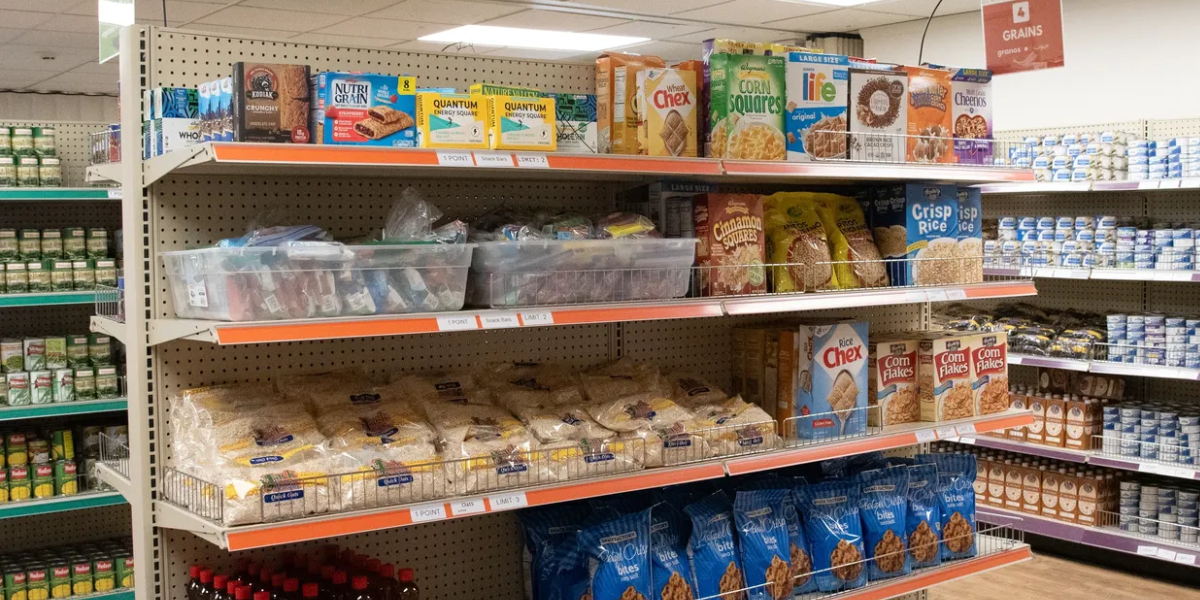
Since opening its new pantry space in March 2025, Venture Compassionate Ministries has witnessed firsthand the transformational impact that dignity-centered food access can have on a community. In 2025 alone, the pantry served nearly 9,000 individuals representing more than 2,600 households throughout the Greater Rochester region.
Yet even in the midst of success, one small but persistent challenge emerged. After guests completed their shopping experience, volunteers would assist in bringing groceries from the checkout area to vehicles parked outside. However, one commonly used exit included a large seven-inch step and was not handicap accessible. Traditional grocery carts struggled to navigate the curb safely and smoothly. Volunteers often found themselves lifting heavy carts filled with food, creating physical strain and operational inefficiencies, particularly for volunteers or those with limited physical strength.
Rather than simply accepting the problem as unavoidable, community partners began asking a different question: “What if we could design something better?”
That question sparked a remarkable collaboration between the Mechanical and Mechatronics Engineering Technology Department at the Rochester Institute of Technology, Wegmans, and Venture Compassionate Ministries.
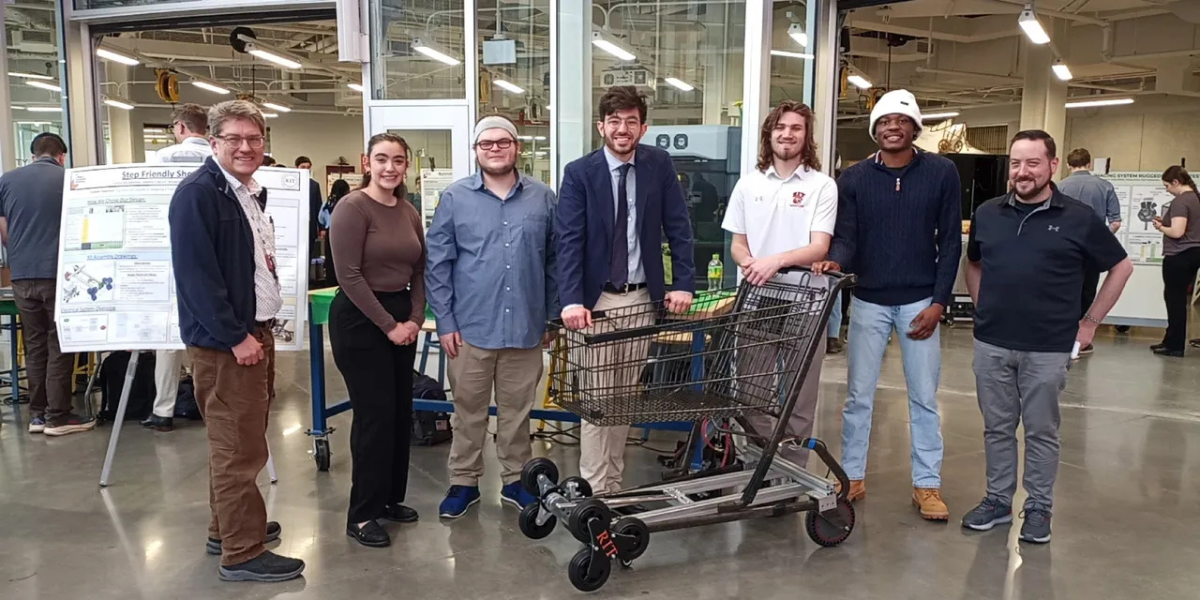
As part of RIT’s nationally recognized Multidisciplinary Senior Design (MSD) program, fifth-year engineering students in the MCET-555 class are challenged to solve real-world problems through hands-on innovation and collaboration. Each project requires students to move from concept to prototype while managing every stage of the engineering process themselves, including research, design, testing, scheduling, risk management, and implementation. For students Katina Mundemba, Isabella Ciaccio, Benjamin Liebermensch, Willy Kraus, and Ross Boyle, the challenge became deeply human:
How do you create a grocery cart capable of safely navigating a seven-inch curb while still being manageable for a single user of any strength?
This was not simply an engineering assignment. It was an opportunity to improve the experience of service, accessibility, and dignity for both volunteers and pantry guests. Guided by experienced faculty mentors and supported through RIT’s rigorous studio-based engineering model, the team dedicated hundreds of hours toward designing and prototyping a practical solution. Their work blended creativity, technical expertise, testing, collaboration, and empathy, demonstrating that engineering is not only about mechanics and systems, but also about people and communities.
Wegmans played a critical role by donating shopping carts for the students to study, modify, and incorporate into their design process. Venture Compassionate Ministries opened its food pantry operations to the students, allowing them to observe firsthand the challenges volunteers encountered daily. Together, these organizations created a living laboratory where innovation could directly intersect with community need. The resulting Step Friendly Shopping Cart became more than a prototype.
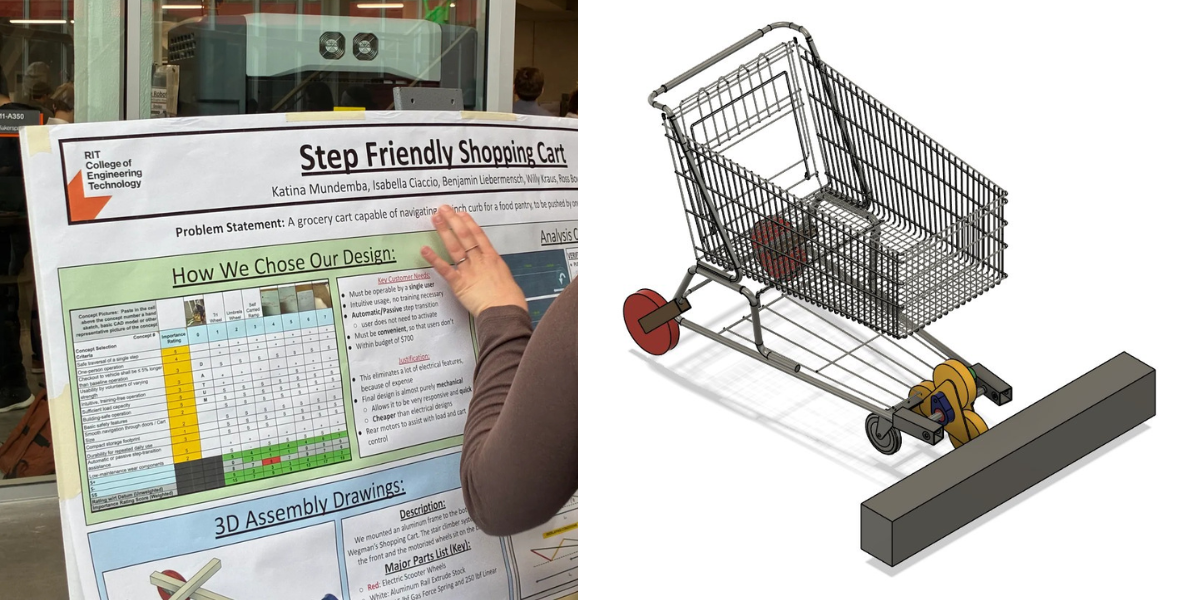
It became a symbol of what is possible when education, business, nonprofit organizations, and community members work together around a shared mission. This partnership demonstrates that addressing food insecurity is about far more than distributing groceries. It is about removing barriers. It is about designing systems that communicate worth and care. It is about ensuring that every neighbor, and every volunteer serving them, experiences dignity, accessibility, and hope. At its core, this story is about collaboration rooted in compassion.
A food pantry identified a challenge.
Students embraced it as an opportunity.
A local business invested resources.
Engineers applied their skills.
Volunteers shared their experiences.
And together, they created something that made everyday service safer, more accessible, and more dignified for both volunteers and pantry guests.
The Step Friendly Shopping Cart represents what can happen when people listen closely to the needs of their neighbors and choose to respond with creativity, collaboration, and care. A challenge was identified. Partnerships were formed. Knowledge and resources were shared. And through that collaboration, a practical solution was created that will directly benefit the community.
At its heart, this project is about loving our neighbors well, not only through providing food, but by removing barriers, honoring dignity, and making service more accessible for everyone involved.
When communities, schools, businesses, and nonprofit organizations work together with a shared commitment to caring for others, meaningful change becomes possible.
This story adapted from the original article, published here.
Most Popular Blogs